Monday, December 1, 2014

December 3, 1864---"The whole shebang!"


DECEMBER 3, 1864:        

William Tecumseh Sherman continues marching. Today, his left wing reaches Camp Lawton P.O.W. Camp, expecting to liberate its 10,229 Union prisoners. Instead, the camp is deserted, the men having been moved elsewhere. In retaliation, Sherman burns the town of Millen. 


Camp Lawton had been holding the overflow from Andersonville (Camp Sumter). If anything, conditions at Camp Lawton were physically worse for the men, who were not even provided with tents. Instead, the men were forced to build very crude shelters out of bundles of brush tied together with twine. These “shebangs” as they were called, provided essentially no protection from the elements. The expression, “That’s the whole shebang” is derived from the experience of men at Camp Lawton. 

As General Schofield’s men prepare to settle into Winter Quarters at Nashville, the first of many wires arrives from Washington demanding that he pursue and destroy John Bell Hood C.S.A.’s shattered Army of Tennessee. Schofield’s choice to hunker down behind the lines (seemingly in safety and comfort) is not put in a good light when Hood announces that his 17,000 men have “trapped” 60,000 Union troops inside Nashville. In reality, Schofield’s men do need to reprovision and refit, and Hood is capable of nothing more than ordering Nathan Bedford Forrest to continue his incessant hit-and-run raids. 


December 2, 1864---A Gracie in Gray


DECEMBER 2, 1864:        

General Archibald Gracie III C.S.A. (b. 1832) is killed in action today at Petersburg. Gracie is from a prominent New York family. Gracie Mansion, now the residence of New York City’s mayors, was built by his grandfather. Despite Gracie’s Northern pedigree, he chose to throw in his lot with the South.


General Gracie’s son and namesake, Colonel Archibald Gracie IV (of the postwar New York 7th Militia)  (1859-1912) is known to history as the last survivor to leave the R.M.S. TITANIC when the great ship sank on April 15, 1912. The ship literally went down under his feet. Colonel Gracie suffered severe hypothermia while in the 28 degree waters of the North Atlantic and never recovered from the ordeal, dying in December 1912. 

Colonel Gracie was an amateur historian, and wrote two books, the ponderous The Truth About Chickamauga (where his father had fought with distinction) and The Truth About The Titanic (Colonel Gracie referred to every man who rushed a lifeboat in derogatory racial and ethnic terms, and focused mostly on the doings of the members of the Social Register who were aboard the doomed vessel --- it should be noted that his behavior was not at all unusual for the era). Despite its flaws, The Truth About The Titanic is still in print (as Titanic: A Survivor’s Story), and Gracie remains one of the better-known figures of that ‘night to remember.”

December 1, 1864---The Robe Dress

DECEMBER 1, 1864:        

In the midst of increasingly cold and inclement weather, General John Schofield U.S.A.’s forces join General George H. Thomas’ forces in Nashville.

  
Godey’s Lady’s Book introduces the “robe dress” for Christmas, and announces that as of January 1865, its annual subscription price will rise from three dollars to four dollars. Wartime inflation is blamed for the increase. 


November 30, 1864---The Battle of Franklin, Tennessee


NOVEMBER 30, 1864:     

The Battle of Franklin, Tennessee:

Over the last week General John Bell Hood C.S.A. has been fighting a series of small-scale engagements (collectively known as “The Battle of Columbia”) along the rail line leading north from Atlanta to Nashville in hopes of disrupting the 30,000 men of the Federal Army of The Cumberland under General George H. Thomas U.S.A., who have been effectively shadowing him since Sherman left the smoking ruins of Atlanta. Hood is also desperate to keep General John Schofield U.S.A.’s 30,000-man strong Army of The Ohio from linking up with Thomas and giving the Union a better than 2-to-1 advantage in battle.


On November 29th, Hood attempts to entrap Schofield’s forces at Spring Hill. Not unsurprisingly, the tip of Hood’s spear, General Nathan Bedford Forrest C.S.A. and his men along with General Patrick Cleburne C.S.A. and his troops, manage to engage the Union force in a bold blocking action. 

Hood forgets, however, to advise General Benjamin F. Cheatham C.S.A. to guard the flank, and after nightfall, Schofield’s entire army inexplicably marches right past the Confederate encampment without anyone being the wiser and enters the outer Union lines at Franklin. The Battle of Spring Hill is a relatively bloodless engagement --- 350 Union casualties versus 700 Confederate casualties --- but both tactically and strategically, it is a disaster for the South.


Hood wakes up on the morning of the 30th “as wrathy as a rattlesnake” and in a blistering Council of War accuses his subcommanders of cowardice and of failure to engage the enemy. Ignoring his subordinates’ advise that he will be attacking a reinforced enemy placed within longstanding well-entrenched lines, Hood orders that the Army of Tennessee break through the outer Union defenses at Franklin prefatory to taking Nashville.  Hood’s men begin marching north. 

The 30,000 Federal troops at Franklin are ensconced behind three rings of earthworks and obstacles. In order to attack this force, Hood’s 25,000 men will be forced to march over two miles of open ground on a front two miles wide. They are supported by just a single battery. 

As soon as Hood’s troops begin the long march (larger than Pickett’s Charge at Gettysburg), the Union batteries open up, blowing huge holes in the line. As the Confederates come within range of the three-tiered Union defenses, the Federals begin firing a hail of musket fire. Many, many men go down. Six Confederate General Officers are lost this day at Franklin, including the South Carolina fire-eater States Rights Gist, and the much-honored and renowned Patrick Cleburne. 


On the Union side, one little-known but historically important soldier is badly wounded and nearly dies --- nineteen year old Colonel Arthur MacArthur, “The Boy Colonel,” who will, after the war, become the father of General Douglas MacArthur. Colonel MacArthur is eventually promoted to General’s rank and receives the Medal of Honor for his Civil War service (Arthur MacArthur and Douglas MacArthur are the only father and son to ever win the Medal of Honor). World War II would have been much different had Arthur MacArthur died at Franklin. 

States Rights Gist
 
Patrick Cleburne


Arthur MacArthur
Douglas MacArthur
The Union loses 189 killed, 1,033 wounded, and 1,104 missing at the Battle of Franklin. The Confederacy loses 1,750 killed, 3,800 wounded, and 702 missing. In all, the Union toll is 2,300 of 30,000 on the field; the Confederate toll is 6,300 of 25,000. 


Hood’s army comes apart after the Battle of Franklin. The loss of so many top-echelon commanders (beside the six generals killed, six were wounded, and scores of lower-ranking officers and NCOs were killed or injured), effectively decapitates Hood’s command structure, and his seeming indifference to his own accountability enrages his men of the line, many of whom desert in droves. On paper, Hood is supposed to have 50,000 men, but he has already lost at least half his numbers, if not more, to battle and desertion, and so the disappearance of so many more men is catastrophic. He is later accused of “mortally wounding” his army this day. 


Nathan Bedford Forrest, though nominally under Hood’s command, chooses to exercise the command independence which he has demonstrated throughout the war, and takes several thousand men away to continue raiding in Tennessee, further weakening Hood’s Army of Tennessee.  About 17,000 men remain in the ranks for now.   

John Bell Hood
As the historical novelist Michael Shaara (The Killer Angels) pointed out, some men make excellent small unit, brigade, Divisional or even Corps commanders but are overwhelmed by the responsibilities of leading larger forces. So it was with John Bell Hood, whose personal bravery cannot be questioned --- he lost an arm at Gettysburg and a leg at Chickamauga --- whose dedication to the cause is undoubted --- most other men in his position would have opted for an honorable retirement or a sinecure command --- but whose command decisions as the head of the Army of Tennessee have virtually all been not just flawed but flatly wrong. Hood’s impulsive style of leadership, his love for the slashing attack, his disregard for Military Intelligence, his failure to understand battlefield topography, and his blindness to larger all-encompassing issues of strategy or even politics, might not have been quite so terrible if he had remained even a high-ranking subordinate, taking direction from another. As the head of an army he fought himself out of the war at an incalculable cost in blood and Confederate morale. 


Friday, November 28, 2014

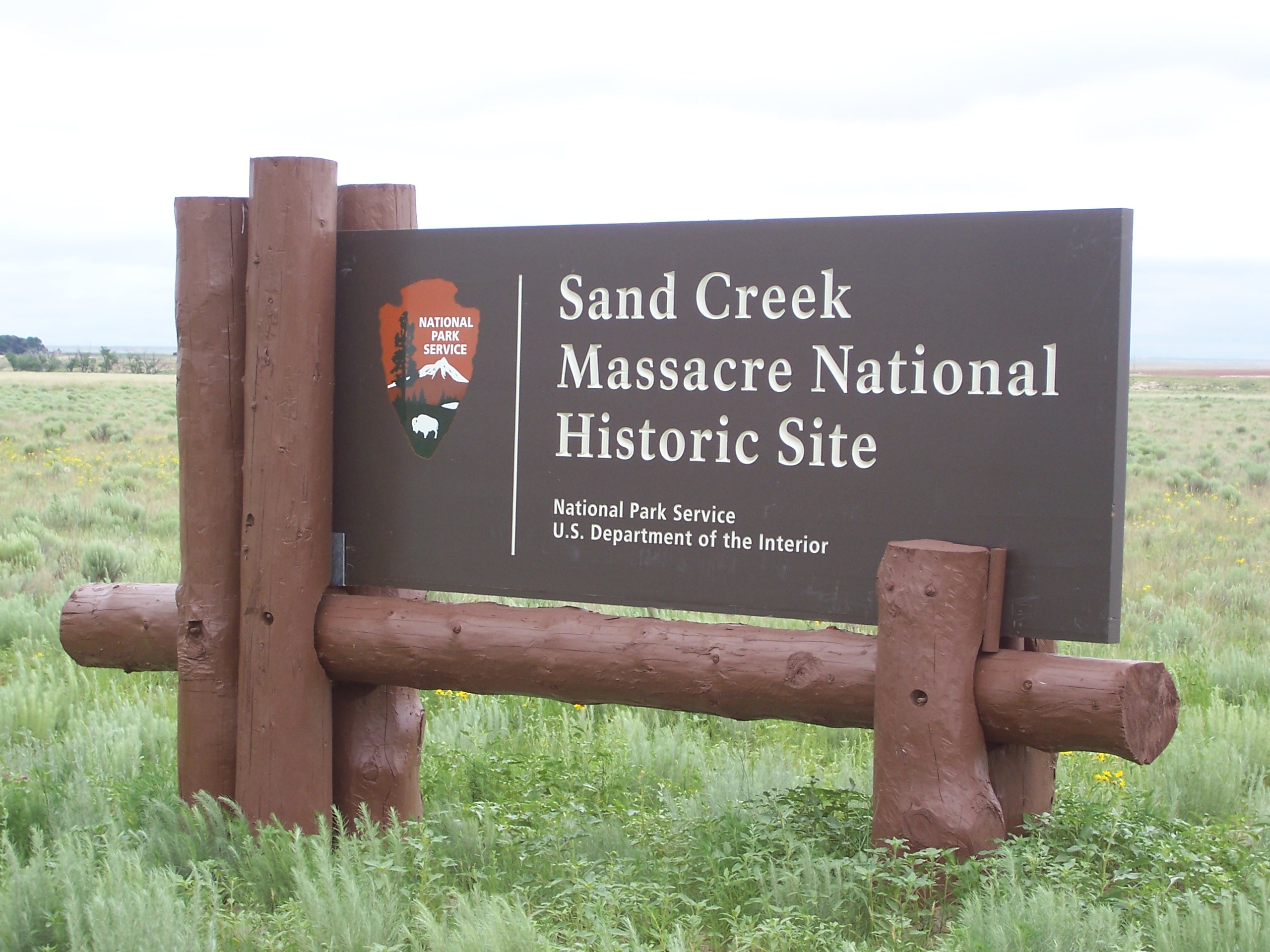
November 29, 1864---The Sand Creek Massacre


NOVEMBER 29, 1864:      

The Sand Creek Massacre:     

In one of the defining atrocities of the frontier war against Native Americans, Colonel John Chivington of the U.S. Army, an ordained Methodist minister, ardent abolitionist, and Freemason, took a 700-man force against a village of Cheyenne and Arapahoe Indians encamped along Big Sandy Creek in southeastern Colorado. 


Chivington’s ostensible motive was to punish the Dog Soldiers of the Cheyenne for depredations against miners and settlers in the Colorado Territory. However, just two months before, the Cheyenne Chief Black Kettle had signed a peace treaty with the United States government in which the Dog Soldiers had agreed to lay down their arms. Chivington was well aware of the treaty and well aware that there had been no violence in the region since the September 28th signing ceremony. Thus, the attack was completely unprovoked.
Chivington was also very well aware (having been advised by scouts) that there were no combatant braves in the village on Big Sandy Creek, the Indian men having gone on a late season buffalo hunt to stock up on meat and materiel for the coming winter. There were definitely, despite his subsequent report, no Dog Soldiers in camp. Only a few younger and older men, and a number of chiefs, were standing watch over the camp, which was filled with women, children and senior citizens. 

When the Indians saw Chivington’s charging column, they raised both a white flag and an American flag. Both flags were ignored as the troops thundered down into the encampment, hacking, slashing and firing point-blank at running, screaming women and children and hobbling old women.


The brutality of the attack made strong men sick. When a trooper asked Chivington what should be done with the toddlers and infants, Chivington responded, “Nits breed lice,” and ordered the babies killed. Of 200 Indians in camp, at least 170 were killed outright, the remainder wounded. Many of the women and female children were brutally raped, some, reportedly, post-mortem. 

 
When it became clear that there were no resisting warriors in camp, Captain Silas Soule refused to order his men to fire. This enraged Chivington, and led to a hot dispute between the two men. (Soule subsequently swore out a complaint against his Commanding Officer, but was murdered in cold blood by “persons unknown” on a Denver street not long after he testified against Chivington). 


Major Edward Wynkoop, who had negotiated the treaty with Chief Black Kettle also testified against Chivington. 


The general testimony against the Colonel was damning:

I saw the bodies of those lying there cut all to pieces, worse mutilated than any I ever saw before; the women cut all to pieces . . . With knives; scalped; their brains knocked out; children two or three months old; all ages lying there, from suckling infants up to warriors . . . By whom were they mutilated? By the United States troops . . . --- John S. Smith

Fingers and ears were cut off the bodies for the jewelry they carried. The body of White Antelope, lying solitarily in the creek bed, was a prime target. Besides scalping him the soldiers cut off his nose, ears, and testicles-the last for a tobacco pouch . . .  --- Stan Hoig

Just to think of that dog Chivington and his dirty hounds, up there at Sand Creek. His men shot down squaws, and blew the brains out of little innocent children. You call such soldiers Christians, do you? And Indians savages? What do you suppose our Heavenly Father, who made both them and us, thinks of these things? I tell you what, I don't like a hostile redskin any more than you do. And when they are hostile, I've fought them, hard as any man. But I never yet drew a bead on a squaw or papoose, and I despise the man who would --- Kit Carson


The Joint Committee on The Conduct of The War held:

As to Colonel Chivington, your committee can hardly find fitting terms to describe his conduct. Wearing the uniform of the United States, which should be the emblem of justice and humanity; holding the important position of commander of a military district, and therefore having the honor of the government to that extent in his keeping, he deliberately planned and executed a foul and dastardly massacre which would have disgraced the verist savage among those who were the victims of his cruelty. Having full knowledge of their friendly character, having himself been instrumental to some extent in placing them in their position of fancied security, he took advantage of their in-apprehension and defenceless condition to gratify the worst passions that ever cursed the heart of man.


Chivington’s force later decorated their horse bridles with the mutilated fingers, toes, penises, and unborn fetuses  of the Indians as trophies. Despite these reported grotesqueries, Chivington was not even censured, though he was passed over for future promotions.  


The Massacre was devastating to the Cheyenne, who lost many tribal elders, and thus much of their social organization. The Sand Creek Massacre led to the rejuvenation of the Dog Soldiers and continuing violence in the Colorado Territory.