Friday, July 19, 2013

July 22, 1863---Grant and Sherman


JULY 22, 1863: 

General Grant writes to President Lincoln recommending the promotion of William Tecumseh Sherman. His letter reads in part:

“I would most respectfully but urgently recommend the promotion of Maj.-Gen. W. T. Sherman…to the position of brigadier-general in the regular army. The first reason for this is…great fitness for…command…Second…great purity of character…Third [he has] honorably won this distinction upon many well-fought battlefields…To General Sherman I was greatly indebted for his…forwarding to me, during the siege of Fort Donelson, reinforcements…At the battle of Shiloh, on the first day, he held with raw troops the key points to the landing. To his individual effort I am indebted for the success of that battle. Twice hit, and (I think three) horses shot under him on that day, he maintained his position with his raw troops…I do not believe there was another division commander on the field who had the skill or experience to have done it.”

Lincoln did not know it yet, but in Grant, Sherman and Philip Sheridan he had found the Union answer to Lee, Jackson and Stuart. 


July 21, 1863---The greatest mistake Meade never made.


JULY 21, 1863:            

Union forces continue to harry the Rebels retreating from Gettysburg. Although the Confederate army is too enervated to turn and fight, General George Meade, commanding the Army of the Potomac, stubbornly refuses to engage Robert E. Lee in a major battle. This angers President Lincoln, who, recalling General McClellan’s inaction for weeks after Antietam, is convinced that Meade is the same sort, unwilling to strike a decisive blow. However, some historians have been kinder to Meade, saying that a major pursuit was “the greatest mistake Meade never made” as the army’s commander. Lincoln was not present on the field; Meade was, and Meade knew just how battered his army really was. Bad weather after July 3rd would have turned any pursuit into a Mud March. He had had to send lightly wounded men to New York to quell the Draft Riots for the simple reason that he had no unwounded men to send. Having been in command only a week he had had no time to establish a chain of command, and what chain of command there had been had been broken at Gettysburg. Had Meade engaged the Army of Northern Virginia with his bruised force, it is quite possible that that equally bruised Rebel force might have turned at bay, and found the strength for one more good fight. Even a minor Confederate success in the shadow of Gettysburg would have damaged Northern morale and inflated Southern morale correspondingly.  By limiting his army to harassing actions, Meade allowed his troops to regroup even as he kept the retreating Confederates off balance. 


Thursday, July 18, 2013

July 20, 1863---"It was terrible."


JULY 20, 1863:           

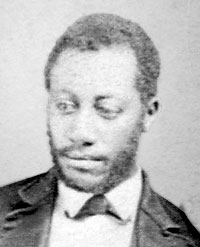
Frederick Douglass’s son Lewis Henry writes a stark note to his wife Amelia about the Battle of Battery Wagner:

“We charged that terrible battery on Morris Island known as Fort Wagner, and were repulsed with a loss of 300 killed and wounded. I escaped unhurt from amidst that perfect hail of shot and shell. It was terrible.”


July 19, 1863---The Battle of Buffington Island, Ohio


JULY 19, 1863:            

The Battle of Buffington Island, Ohio. 

In the only Civil War battle to occur within the State of Ohio, Colonel John Hunt Morgan is captured at the head of his Raiders when they are overwhelmed by superior numbers. Morgan would eventually escape from captivity and return to his command. 


Wednesday, July 17, 2013

July 18, 1863---The Battle of Battery Wagner


JULY 18, 1863:           

The Battle of Battery Wagner (The Second Battle of Battery Wagner).  

A scene from "Glory," starring Morgan Freeman and Matthew Broderick
After being repulsed from Battery Wagner on Morris Island on the 10th of July, the Union again attempts to take the massive sand fortification protecting Charleston, South Carolina, this time assigning the 54th Massachusetts (U.S.C.T.) to the job under the command of Colonel Robert Gould Shaw. 

After an all-day bombardment which did little damage to the fort, the 54th Massachusetts launched its assault at 7:45 P.M.  In a wartime innovation, the Union uses calcium lights (“limelights”) to illuminate the darkening battlefield. Since the approach route to the fort was narrow and well-dominated by Confederate fields of fire, the Union troops were devastated, but the 54th Massachusetts managed to take the parapet, where they engaged in vicious hand-to-hand fighting with the Southern defenders.

Over 1,500 Union men were lost in the battle. The Southerners bayoneted any wounded African-Americans they saw or executed any black prisoners they took. 

After the battle, the 54th retained only 300 of its men. Colonel Shaw was killed (shot and bayoneted at least seven times) and his body was dumped in the mass grave the Rebels dug for the blacks they had killed. Although this was meant to be an insult, Shaw’s father, a leading abolitionist, stated that it was in fact an honor to his son. 

The 54th Massachusetts was lauded for their valor, and many whites who had doubted the resilience of black soldiers were forced to rethink their prejudices (even in the South). 

The first Medal of Honor given to a black soldier was awarded the color bearer who retrieved the Stars and Stripes from the corpse-strewn field.